
Production guide
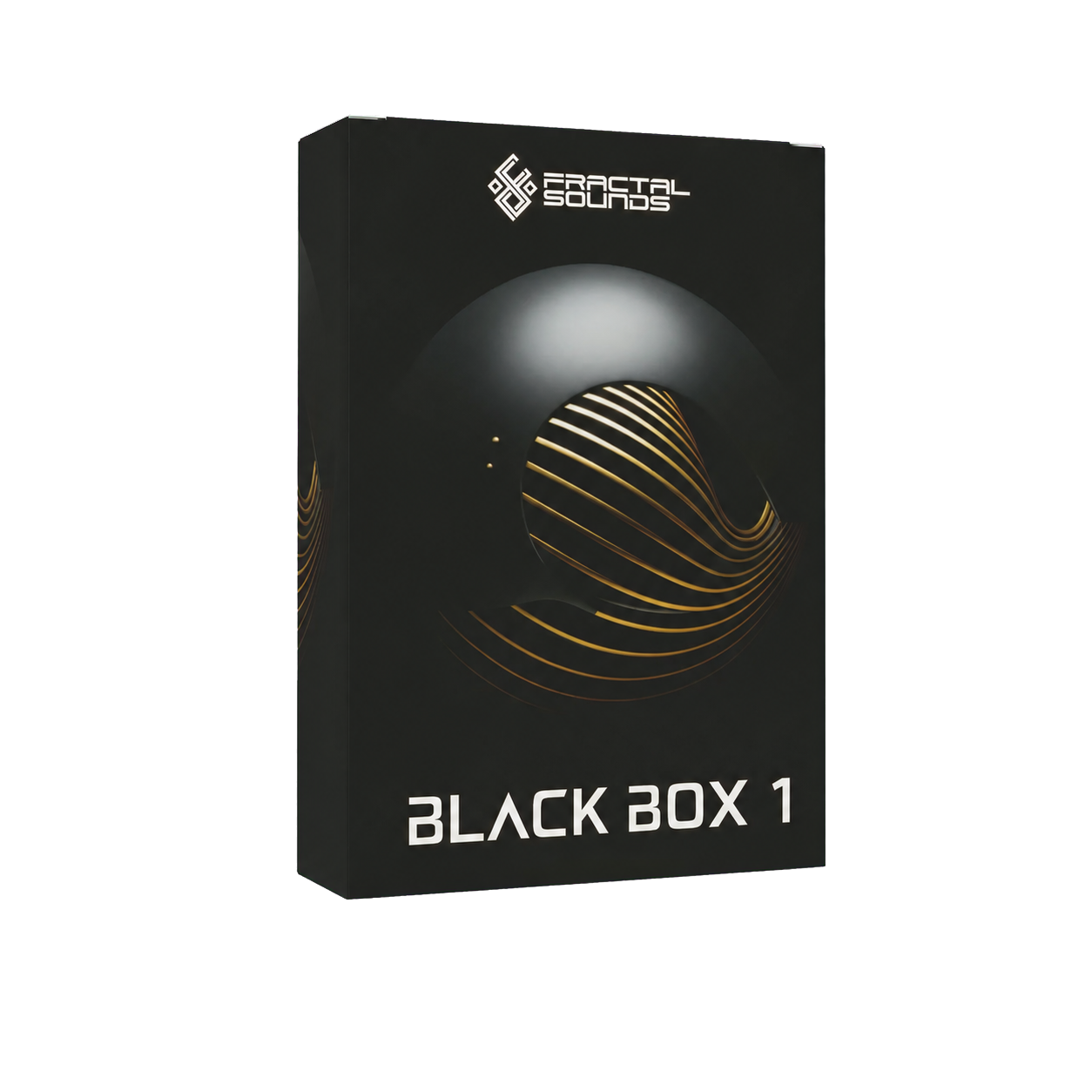
Black Box Vol.1: 148 free one-shots for sequences, fills and sound design
Turn Black Box's free WAV stabs and micro kits into rhythmic parts, reverse effects, granular fills and Harmor resynthesis using Black Marvin's full livestream.
Watch the video
Watch on YouTube (opens in a new tab)Video by Black Marvin Published
Recorded in January 2023. The 2022 pack name identifies the original release. Plugin opinions, promotions and future-feature discussions in the livestream are historical; the sample techniques remain the focus here.
What is in Black Box Vol.1?
Black Box Vol.1 contains 148 WAV one-shot samples for underground electronic production. The stream introduces a folder of 100 stabs alongside micro kits. Each micro kit groups three related sounds, providing small variations or different notes that can help a rhythmic phrase develop.
These are individual sound events to arrange or trigger, not a collection of finished song projects. The pack's original name includes 2022, while this demonstration was published in January 2023. That release label does not make the samples dependent on a particular year of DAW software.
Do I need a special sampler or an FL Studio project?
Use a DAW or sampler that can load WAV audio. You can place a one-shot directly on an audio track or trigger it from a sampler with MIDI. Extract the archive and keep the sample folder in a stable location before building projects around it.
FL Studio is the demonstration environment, and later techniques use Granulizer, Harmor and several effects. Those tools are not necessary for basic sample playback. The download supplies the source sounds; the stream's complete project and commercial processors are separate.
How do I turn a few stabs into a sequence?
At 9:09, Black Marvin builds a simple pattern from the one-shots before adding elaborate processing. Start with a few events, use rests to establish the groove and choose one related sound as a reply. A micro kit can give that reply a connected character without repeating the exact same hit.
The example runs at 142 BPM, which is a session choice rather than a required pack tempo. Place the hits to suit your track. If a sample's tail overlaps the next event, adjust its length or envelope and listen to whether the overlap helps the phrase.
How should I use the key labels and manage sample levels?
The stream points out the note labels so pitched stabs can be matched to the arrangement. In a sampler, check its root-note mapping: pressing C does not necessarily produce C if the source was recorded at another pitch and the mapping still assumes C. Correct that relationship before writing a melodic part.
Around 31:29, Black Marvin explains that the samples were normalized to a peak of 0 dB. Begin playback at a conservative track or sampler gain, especially when layering hits or adding resonant effects. Normalization describes the file's peak level, not how loud every sound will feel in a mix.
Why do filter and delay combinations work well with these sounds?
From 10:24, delay adds motion to a basic sequence. Later, Multipass gives different bands their own filtering and delay behaviour. Around 22:34, the filter-before-delay order lets changes in the incoming tone become part of the repeating texture.
Try a simple filter followed by a delay you already have. Adjust the rhythm first, then the amount of movement and feedback. At 25:55, the stream switches to alternative plugins, reinforcing that the technique is a relationship between processes rather than a requirement to own one named chain.
Can reversing a one-shot create a transition or atmosphere?
From 13:25, a reversed stab feeds the spatial processing and becomes a more atmospheric gesture. Reversal changes the event's shape, so the energy can rise toward a point instead of beginning with its original attack. Delay then extends that gesture into the surrounding space.
Place the reversed event with its destination in mind and trim or fade the edges as needed. Compare a short accent with a longer printed effect. The useful transition is the version that connects two moments in your arrangement, not necessarily the longest tail available.
How can I make a granular fill from a single stab?
From 34:39, the session moves to FL Studio Granulizer. Around 39:51, Black Marvin records the changing output into Edison, then selects and edits a useful passage. The original stab becomes source material for a new audio event instead of remaining one repeated hit.
Record several variations and choose the section that answers your phrase. Check the actual pitch of the rendered result, especially if the sampler's keyboard mapping did not match the source note. Add reverb after choosing the rhythm so the space supports the fill rather than hiding its timing.
What does Harmor add to the same sample?
From 55:45, a Black Box sample is dropped into Harmor's image area for resynthesis. The session explores a pluck and a more sustained sound, then discusses holding the image position or moving it with modulation. This is a different transformation from Granulizer's treatment of the audio.
At 1:03:42, Black Marvin also points to the separate free bank of 30 Harmor presets. Use that bank if you want ready-made Harmor patches; use Black Box if you want WAV sources to arrange, process or resynthesize. The older discussion of Harmor availability should be checked against current Image-Line information.
How can multi-effects create variations without losing the groove?
The later sequence section, starting around 1:09:50, tries several multi-effects approaches. Sludge in Multipass and other processors reshape an already simple rhythm. The common idea is to give the processor a clear pattern, then keep the variations that contribute to that pattern.
Print a few passes if the result changes continuously. Compare them against the drums, and retain some unprocessed articulation if the original groove disappears. None of the demonstrated commercial multi-effects libraries is bundled with the 148 free samples.
Are these sounds useful outside psytrance, and what changes in Vol.2?
Near the end, Black Marvin explicitly discusses uses beyond psytrance, including psytech, bass music, house and techno. Their role depends on the pattern, pitch, processing and arrangement you build. Begin with the musical function you need rather than treating the genre label as a restriction.
Black Box Vol.2 is a separate free collection of 200 one-shots. Its video focuses on further arrangement ideas and turning samples into wavetables or granular sources in Phase Plant. Both packs can be downloaded without choosing the optional newsletter subscription.
Bring Black Box Vol.1 into your session.
Get the free pack and follow the setup guidance above. Newsletter signup is optional.